Buy langrony.eu ?
We are moving the project
langrony.eu .
Are you interested in purchasing the domain
langrony.eu ?
domain@kv-gmbh.de · 0541-91531010
Buy langrony.eu ?
What is verbal and nonverbal communication?
Verbal communication involves the use of words, spoken or written, to convey a message. It includes conversations, speeches, presentations, and written messages. Nonverbal communication, on the other hand, involves the use of gestures, facial expressions, body language, and tone of voice to convey meaning. Both verbal and nonverbal communication are essential in conveying messages effectively and understanding others in various social interactions. **
Is laughter verbal or nonverbal communication?
Laughter is considered a form of nonverbal communication. While it is a vocal expression involving the production of sound, laughter is typically spontaneous and often communicates emotions such as joy, amusement, or relief without the use of words. The tone, pitch, and duration of laughter can convey a range of meanings and emotions, making it a powerful nonverbal communication tool. **
Similar search terms for Verbal
Top-Angebote
Products related to Verbal:
-
CGP Books 11+ GL Ages 8-9 Practice Book; Assessment Tests 4 Books Set: English, Maths, Verbal and Non-Verbal ReasoningThis 11+ bundle is an excellent way to prepare children aged 8-9 for the GL 11+ tests. It contains our four Practice Books with Assessment Tests — each book covers English (9781789081534), Maths (9781789081572), Verbal Reasoning (9781789081701) and Non-Verbal Reasoning (9781789081503) separately. The Practice Books include practice questions for every topic and several realistic Assessment Tests. Answers can be found in the back of the books and free online editions are also included. This bundle is ideal for the 11+ tests set by GL Assessment and other test providers, and provides excellent practice for the Kent Test. A separate bundle for the CEM tests is also available.27,99 £*Shipping: 2,99 £Secure redirect to the provider
-
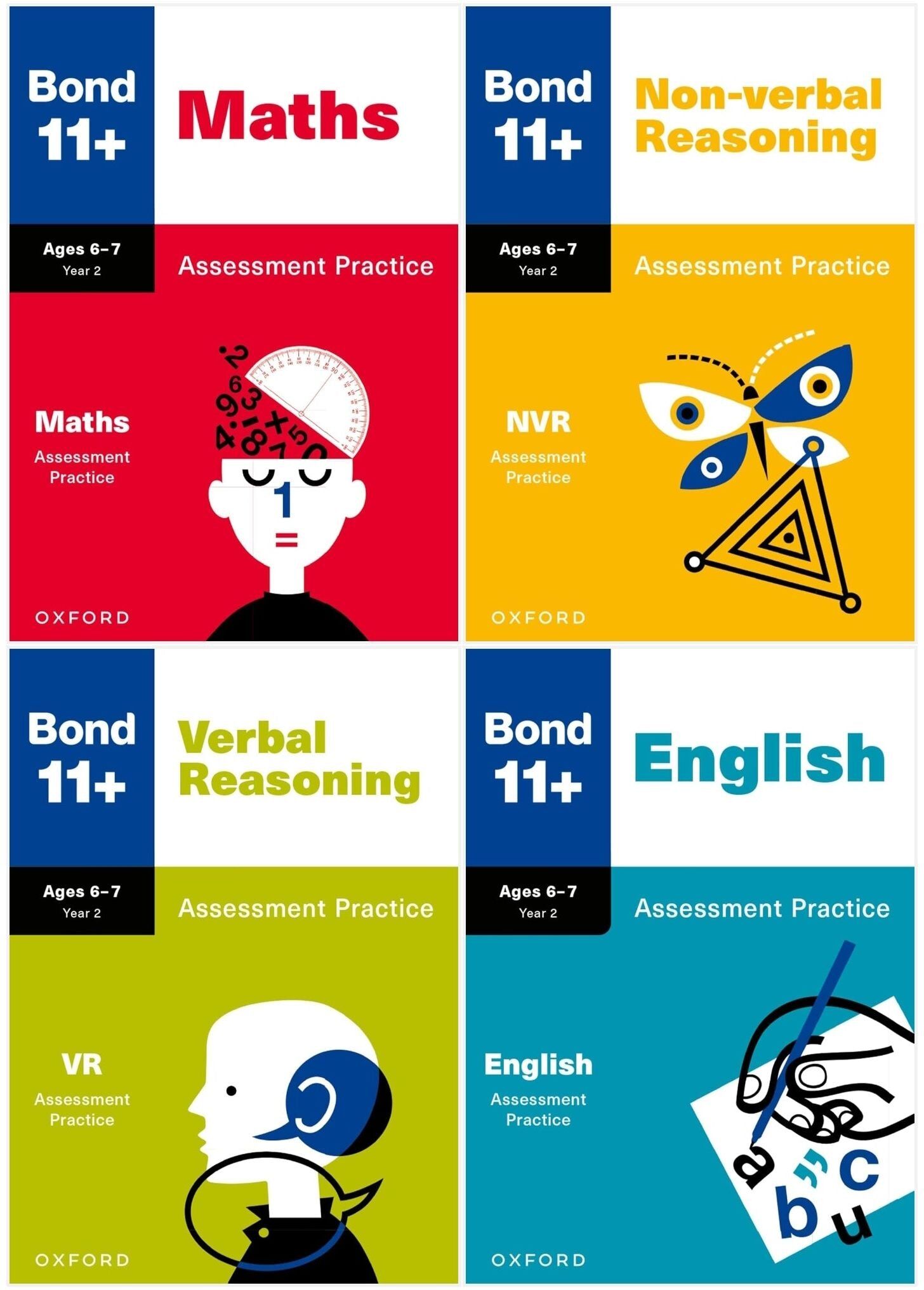
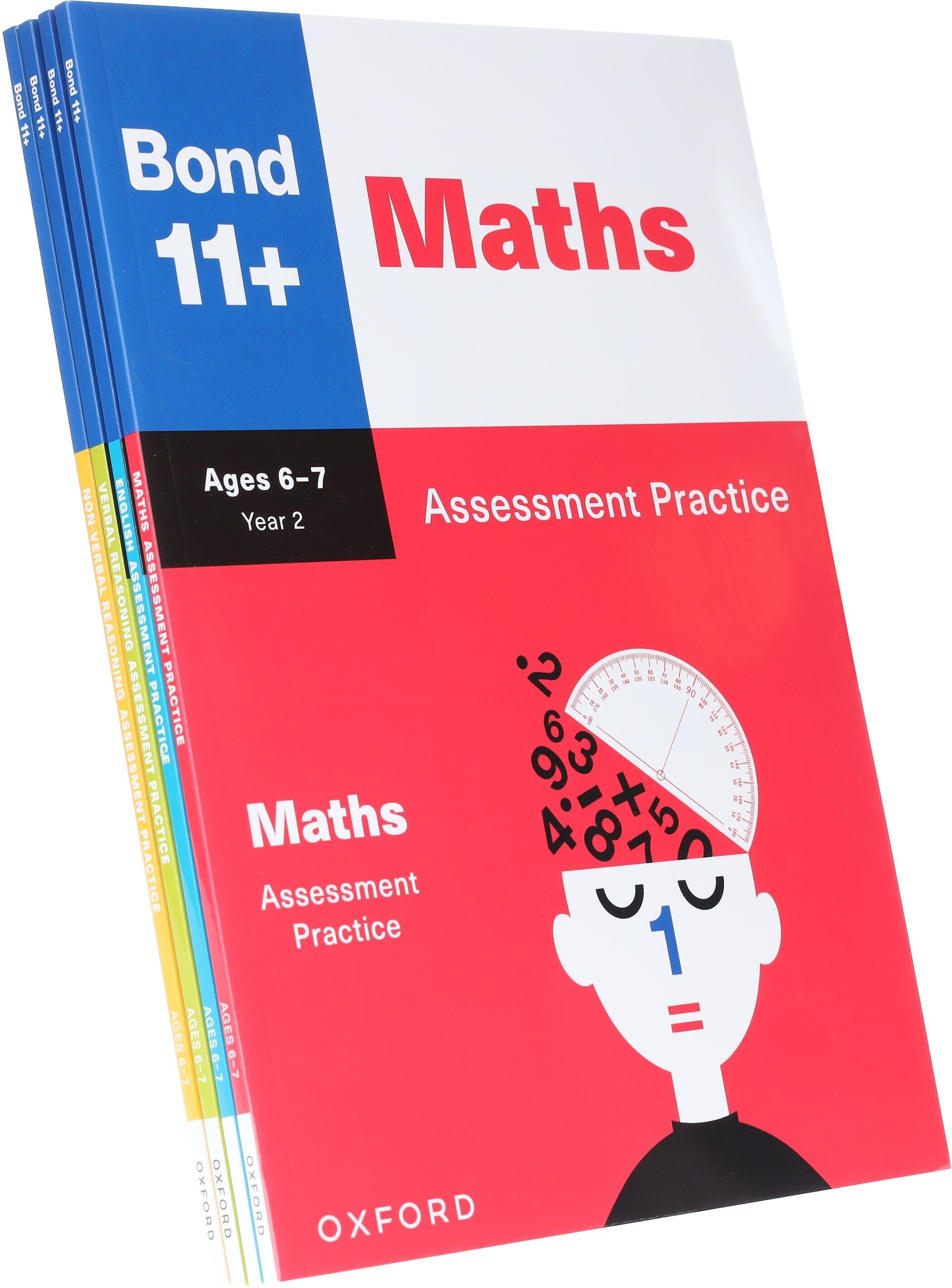
Bond 11+ Maths and English Verbal & Non-Verbal Reasoning Assessment Practice 4 Books Collection Set – Ages 6-7 Years- Paperback Oxford University PressTitles in this Set: 1. Bond 11+ English Assessment Practice 2. Bond 11+ Maths Assessment Practice 3. Bond 11+ Non-verbal Reasoning Assessment Practice 4. Bond 11+ Verbal Reasoning Assessment Practice Description: Bond 11+ English Assessment Practice Bond 11+ English Assessment Practice for age 6-7 years offers accessible practice questions for children starting their journey towards the 11+ test. This fully revised edition includes essential guidance and full answer explanations and will develop the skills that are vital for success. Bond 11+ Maths Assessment Practice Bond 11+ Maths Assessment Practice for age 6-7 years offers accessible practice questions for children starting their journey towards the 11+ test. This fully revised edition includes essential guidance and full answer explanations and will develop the skills that are vital for success. Bond 11+ Non-verbal Reasoning Assessment Practice Bond 11+ Non-verbal Reasoning Assessment Practice for age 6-7 years offers accessible practice questions for children starting their journey towards the 11+ test. This fully revised edition includes essential guidance and full answer explanations and will develop the skills that are vital for success. Bond 11+ Verbal Reasoning Assessment Practice Bond 11+ Verbal Reasoning Assessment Practice for age 6-7 years offers accessible practice questions for children starting their journey towards the 11+ test. This fully revised edition includes essential guidance and full answer explanations and will develop the skills that are vital for success.16,99 £*Shipping: 2,99 £Secure redirect to the provider
-
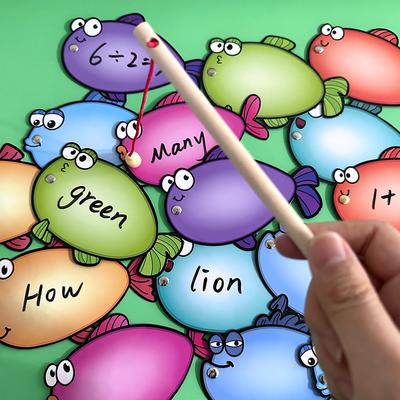
Perfect Picks Market Montessori Reusable Learning Cards Set For Kids Early Education Writing Practice Game Montessori Reusable Learning Cards Set For Kids Early Education Writing Practice GameTurn everyday learning into a fun, handson experience with these Montessori toys designed to spark curiosity and creativity. This engaging set of reusable cards helps young children build essential skills through play, making it perfect for early...39,97 $*Shipping: 0,00 $Secure redirect to the provider

-
What are verbal, nonverbal, and paraverbal communication?
Verbal communication involves the use of spoken or written words to convey a message. Nonverbal communication includes gestures, facial expressions, body language, and other forms of communication that do not involve words. Paraverbal communication refers to the way in which words are spoken, including tone of voice, volume, pitch, and speed of speech, which can greatly impact the message being conveyed. Together, verbal, nonverbal, and paraverbal communication work together to effectively communicate thoughts, feelings, and intentions. **
-
What is the difference between verbal and nonverbal communication?
Verbal communication involves the use of words, either spoken or written, to convey a message. Nonverbal communication, on the other hand, involves conveying messages without the use of words, such as through body language, facial expressions, gestures, and tone of voice. Verbal communication is more direct and explicit, while nonverbal communication can sometimes be more subtle and open to interpretation. Both forms of communication are important in conveying messages effectively and understanding others. **
-
How does verbal communication between humans and animals occur?
Verbal communication between humans and animals occurs through the use of spoken language and vocal cues. Humans can use words, tone of voice, and body language to communicate with animals, such as giving commands to pets or using soothing words to calm them. Animals, in turn, can also communicate with humans through vocalizations, body language, and responses to human speech. This type of communication can help build understanding and trust between humans and animals, and is often used in training and bonding with pets. **
-
How can one simply explain verbal, nonverbal, and paraverbal communication?
Verbal communication involves the use of words to convey messages, whether spoken or written. Nonverbal communication includes gestures, facial expressions, body language, and tone of voice, which can also convey meaning without words. Paraverbal communication refers to the way words are spoken, such as tone, pitch, volume, and speed, which can affect the message being communicated. In summary, verbal communication is using words, nonverbal communication is using gestures and body language, and paraverbal communication is how words are spoken. **


What is the meaning of verbal, nonverbal, and paraverbal communication?
Verbal communication refers to the use of words to convey a message, whether spoken or written. Nonverbal communication involves the use of gestures, facial expressions, body language, and tone of voice to communicate without words. Paraverbal communication focuses on the way words are spoken, including tone, pitch, volume, and speed, which can greatly impact the meaning of the message being conveyed. Together, verbal, nonverbal, and paraverbal communication work in tandem to effectively convey thoughts, feelings, and intentions in interpersonal interactions. **
How can one explain verbal, nonverbal, and paraverbal communication simply?
Verbal communication involves the use of words to convey a message, whether spoken or written. Nonverbal communication includes gestures, facial expressions, body language, and tone of voice, which can all convey emotions and attitudes. Paraverbal communication refers to the way words are spoken, such as tone, pitch, volume, and speed, which can also affect the message being communicated. Together, these three forms of communication work in tandem to convey meaning and understanding between individuals in various social interactions. **
Top-Angebote
Products related to Verbal:
-
OXFORD UNIVERSITY PRESS Bond 11+ Maths English Verbal Reasoning Non-verbal Reasoning Assessment Papers 4 Books Set - Age 6-7Bond 11+ Maths English Verbal Non-Verbal Reasoning Assessment Practice 6-7 years 4 Books Set (Bond Assessment Papers) Developed and written by experienced tutors, Bond 11+ Assessment Practice Books offer exam-style practice questions, perfect for preparing for the GL 11+ exam and other selective school tests, with full answer explanations in a removable booklet. Bond 11+ English Assessment Practice Age 6-7: Covers all of the core 11+ English exam topics including comprehension, spelling, sentences, punctuation, and grammar Bond 11+ Maths Assessment Practice Age 6-7: Covers a wide variety of maths topics including place value, multiplication and division, fractions, shapes, measurement, and diagrams Bond 11+ Non-verbal Reasoning Assessment Practice Age 6-7: Covers a wide variety of non-verbal reasoning topics including shapes, angles and rotation, similarities, sequences, reflections, and grids Bond 11+ Verbal Reasoning Assessment Practice Age 6-7: Covers a wide variety of verbal reasoning topics including word meanings, word connections, missing letters, patterns and sequences, anagrams, and codes16,99 £*Shipping: 2,99 £Secure redirect to the provider
-
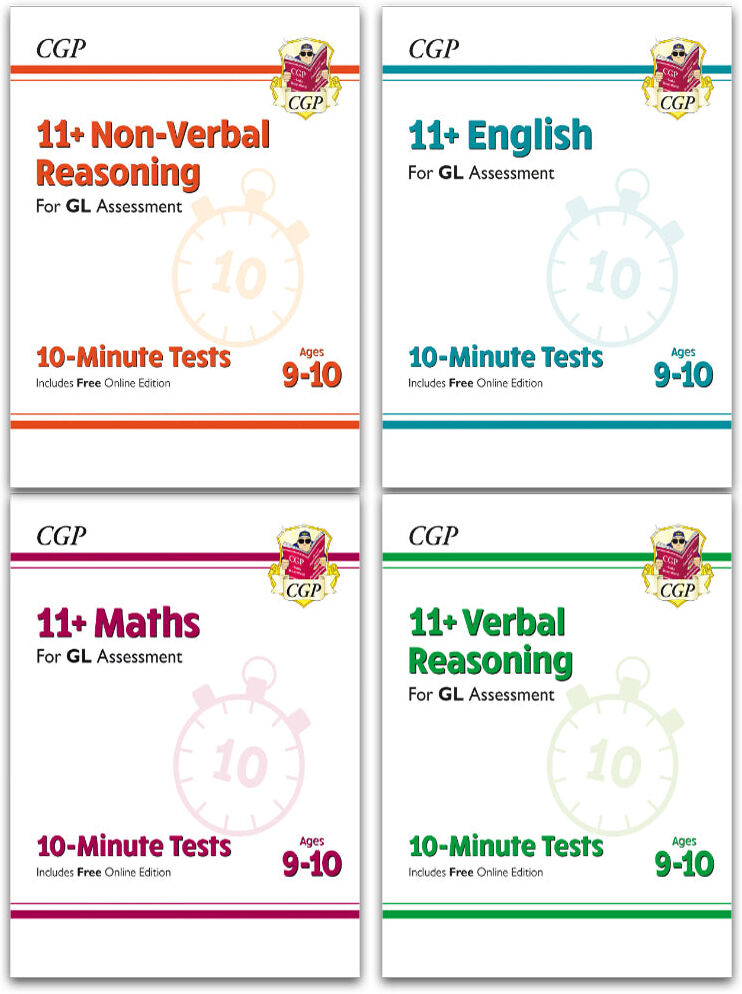
CGP Books 11+ GL 10-Minute Tests Age 9-10 Collection 4 Books Set: Maths, English, Verbal Reasoning, Non-Verbal ReasoningThis CGP book is perfect for providing children with realistic 11+ English preparation in bite-sized chunks. It contains more than thirty 10-Minute Tests, each covering a mixture of topics and skills — with step-by-step answers included in a pull-out booklet. There are also fun puzzle pages throughout to challenge children’s English skills in a more relaxed style, plus a progress chart at the back of the book.This book is ideal for the 11+ tests set by GL Assessment and other test providers, and provides excellent practice for the Kent Test.28,99 £*Shipping: 2,99 £Secure redirect to the provider
-
CGP Books 11+ GL Ages 8-9 Practice Book; Assessment Tests 4 Books Set: English, Maths, Verbal and Non-Verbal ReasoningThis 11+ bundle is an excellent way to prepare children aged 8-9 for the GL 11+ tests. It contains our four Practice Books with Assessment Tests — each book covers English (9781789081534), Maths (9781789081572), Verbal Reasoning (9781789081701) and Non-Verbal Reasoning (9781789081503) separately. The Practice Books include practice questions for every topic and several realistic Assessment Tests. Answers can be found in the back of the books and free online editions are also included. This bundle is ideal for the 11+ tests set by GL Assessment and other test providers, and provides excellent practice for the Kent Test. A separate bundle for the CEM tests is also available.27,99 £*Shipping: 2,99 £Secure redirect to the provider
-
Bond 11+ Maths and English Verbal & Non-Verbal Reasoning Assessment Practice 4 Books Collection Set – Ages 6-7 Years- Paperback Oxford University PressTitles in this Set: 1. Bond 11+ English Assessment Practice 2. Bond 11+ Maths Assessment Practice 3. Bond 11+ Non-verbal Reasoning Assessment Practice 4. Bond 11+ Verbal Reasoning Assessment Practice Description: Bond 11+ English Assessment Practice Bond 11+ English Assessment Practice for age 6-7 years offers accessible practice questions for children starting their journey towards the 11+ test. This fully revised edition includes essential guidance and full answer explanations and will develop the skills that are vital for success. Bond 11+ Maths Assessment Practice Bond 11+ Maths Assessment Practice for age 6-7 years offers accessible practice questions for children starting their journey towards the 11+ test. This fully revised edition includes essential guidance and full answer explanations and will develop the skills that are vital for success. Bond 11+ Non-verbal Reasoning Assessment Practice Bond 11+ Non-verbal Reasoning Assessment Practice for age 6-7 years offers accessible practice questions for children starting their journey towards the 11+ test. This fully revised edition includes essential guidance and full answer explanations and will develop the skills that are vital for success. Bond 11+ Verbal Reasoning Assessment Practice Bond 11+ Verbal Reasoning Assessment Practice for age 6-7 years offers accessible practice questions for children starting their journey towards the 11+ test. This fully revised edition includes essential guidance and full answer explanations and will develop the skills that are vital for success.16,99 £*Shipping: 2,99 £Secure redirect to the provider
-
What is verbal and nonverbal communication?
Verbal communication involves the use of words, spoken or written, to convey a message. It includes conversations, speeches, presentations, and written messages. Nonverbal communication, on the other hand, involves the use of gestures, facial expressions, body language, and tone of voice to convey meaning. Both verbal and nonverbal communication are essential in conveying messages effectively and understanding others in various social interactions. **
-
Is laughter verbal or nonverbal communication?
Laughter is considered a form of nonverbal communication. While it is a vocal expression involving the production of sound, laughter is typically spontaneous and often communicates emotions such as joy, amusement, or relief without the use of words. The tone, pitch, and duration of laughter can convey a range of meanings and emotions, making it a powerful nonverbal communication tool. **
-
What are verbal, nonverbal, and paraverbal communication?
Verbal communication involves the use of spoken or written words to convey a message. Nonverbal communication includes gestures, facial expressions, body language, and other forms of communication that do not involve words. Paraverbal communication refers to the way in which words are spoken, including tone of voice, volume, pitch, and speed of speech, which can greatly impact the message being conveyed. Together, verbal, nonverbal, and paraverbal communication work together to effectively communicate thoughts, feelings, and intentions. **
-
What is the difference between verbal and nonverbal communication?
Verbal communication involves the use of words, either spoken or written, to convey a message. Nonverbal communication, on the other hand, involves conveying messages without the use of words, such as through body language, facial expressions, gestures, and tone of voice. Verbal communication is more direct and explicit, while nonverbal communication can sometimes be more subtle and open to interpretation. Both forms of communication are important in conveying messages effectively and understanding others. **
Similar search terms for Verbal
-
Perfect Picks Market Montessori Reusable Learning Cards Set For Kids Early Education Writing Practice Game Montessori Reusable Learning Cards Set For Kids Early Education Writing Practice GameTurn everyday learning into a fun, handson experience with these Montessori toys designed to spark curiosity and creativity. This engaging set of reusable cards helps young children build essential skills through play, making it perfect for early...39,97 $*Shipping: 0,00 $Secure redirect to the provider
-
Tiny Tots Teens Trends Drawer Game Early Education Montessori Wooden Pitch Ball Box Preschool Learning Training Toy Drawer Game Early Education Montessori Wooden Pitch Ball Box Preschool Learning Training ToyThis Montessori Wooden Pitch Ball Box Drawer Game is a thoughtfully designed earlyeducation toy that transforms playtime into purposeful learning. Crafted for toddlers and preschoolers, it offers a handson, engaging way to support key developmental...39,97 $*Shipping: 0,00 $Secure redirect to the provider
-
Perfect Picks Market Kids Emotional Expression Mirror Early Education & Emotional Learning Toy For Toddlers pinkNurture your childs emotional intelligence with the Kids Emotional Expression Mirrora fun, interactive learning tool designed to help toddlers understand and manage their feelings. This innovative toy features six emotional expression cards and a...49,97 $*Shipping: 0,00 $Secure redirect to the provider
-
How does verbal communication between humans and animals occur?
Verbal communication between humans and animals occurs through the use of spoken language and vocal cues. Humans can use words, tone of voice, and body language to communicate with animals, such as giving commands to pets or using soothing words to calm them. Animals, in turn, can also communicate with humans through vocalizations, body language, and responses to human speech. This type of communication can help build understanding and trust between humans and animals, and is often used in training and bonding with pets. **
-
How can one simply explain verbal, nonverbal, and paraverbal communication?
Verbal communication involves the use of words to convey messages, whether spoken or written. Nonverbal communication includes gestures, facial expressions, body language, and tone of voice, which can also convey meaning without words. Paraverbal communication refers to the way words are spoken, such as tone, pitch, volume, and speed, which can affect the message being communicated. In summary, verbal communication is using words, nonverbal communication is using gestures and body language, and paraverbal communication is how words are spoken. **
-
What is the meaning of verbal, nonverbal, and paraverbal communication?
Verbal communication refers to the use of words to convey a message, whether spoken or written. Nonverbal communication involves the use of gestures, facial expressions, body language, and tone of voice to communicate without words. Paraverbal communication focuses on the way words are spoken, including tone, pitch, volume, and speed, which can greatly impact the meaning of the message being conveyed. Together, verbal, nonverbal, and paraverbal communication work in tandem to effectively convey thoughts, feelings, and intentions in interpersonal interactions. **
-
How can one explain verbal, nonverbal, and paraverbal communication simply?
Verbal communication involves the use of words to convey a message, whether spoken or written. Nonverbal communication includes gestures, facial expressions, body language, and tone of voice, which can all convey emotions and attitudes. Paraverbal communication refers to the way words are spoken, such as tone, pitch, volume, and speed, which can also affect the message being communicated. Together, these three forms of communication work in tandem to convey meaning and understanding between individuals in various social interactions. **
* All prices are inclusive of VAT and, if applicable, plus shipping costs. The offer information is based on the details provided by the respective shop and is updated through automated processes. Real-time updates do not occur, so deviations can occur in individual cases. ** Note: Parts of this content were created by AI.