Buy langrony.eu ?
We are moving the project
langrony.eu .
Are you interested in purchasing the domain
langrony.eu ?
domain@kv-gmbh.de · 0541-91531010
Buy langrony.eu ?
Which lemma can I use to prove the pumping lemma?
To prove the pumping lemma for regular languages, you can use the lemma itself. The pumping lemma states that for any regular language L, there exists a constant p (the pumping length) such that any string s in L with length at least p can be divided into three parts, s = xyz, satisfying certain conditions. By using the pumping lemma, you can show that for any regular language, there exists a pumping length p such that any string in the language can be pumped to generate an infinite number of strings also in the language. **
How to apply the Pumping Lemma?
To apply the Pumping Lemma, you first assume that a language L is regular. Then, you choose a suitable string w from L that satisfies the conditions of the Pumping Lemma. Next, you decompose w into three parts, u, v, and x, such that w = uvx and |v| > 0 and |uv| ≤ p, where p is the pumping length given by the Pumping Lemma. Finally, you show that for any i ≥ 0, the string uv^ix is not in L, thus leading to a contradiction and proving that L is not regular. **

Similar search terms for Lemma
Top-Angebote
Products related to Lemma:
-
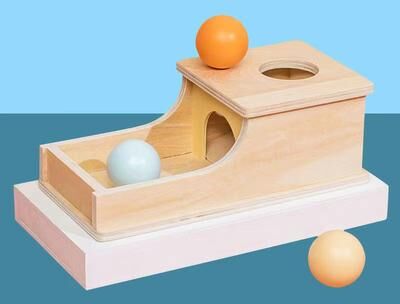
Tiny Tots Teens Trends Drawer Game Early Education Montessori Wooden Pitch Ball Box Preschool Learning Training Toy Drawer Game Early Education Montessori Wooden Pitch Ball Box Preschool Learning Training ToyThis Montessori Wooden Pitch Ball Box Drawer Game is a thoughtfully designed earlyeducation toy that transforms playtime into purposeful learning. Crafted for toddlers and preschoolers, it offers a handson, engaging way to support key developmental...39,97 $*Shipping: 0,00 $Secure redirect to the provider
-
Perfect Picks Market Kids Emotional Expression Mirror Early Education & Emotional Learning Toy For Toddlers pinkNurture your childs emotional intelligence with the Kids Emotional Expression Mirrora fun, interactive learning tool designed to help toddlers understand and manage their feelings. This innovative toy features six emotional expression cards and a...49,97 $*Shipping: 0,00 $Secure redirect to the provider
-
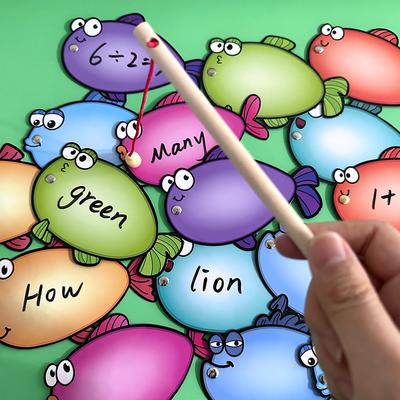
Tiny Tots Teens Trends Bright Color Montessori Wooden Toys, Adorable Caterpillar Puppet, KTV Adults, Kids Early Education Learning Toy For Boys Bright Color Montessori Wooden Toys, Adorable Caterpillar Puppet, KTV Adults, Kids Early Education Learning ToyEnhance Learning with Montessori Wooden Toys Introduce your child to the world of interactive learning with our Montessori Wooden Toys. Designed to stimulate both cognitive development and creativity, these toys are perfect for early education. The...44,97 $*Shipping: 0,00 $Secure redirect to the provider
-
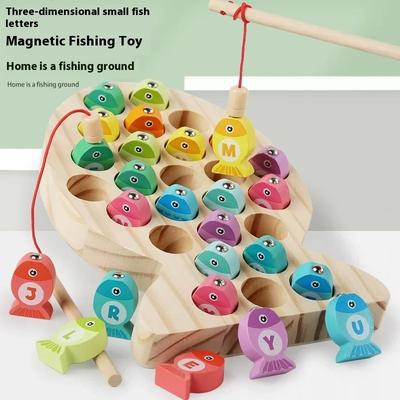
Inspire Select Wooden Montessori Fishing Toy Set Kids Number & Alphabet Learning Game For Early Education Training lettersMake learning fun and interactive with a playful educational experience. This Montessori fishing toy helps children develop essential skills while enjoying handson play. Designed for toddlers and young kids, this wooden learning toy combines...96,97 $*Shipping: 0,00 $Secure redirect to the provider


-
How do you apply the Pumping Lemma?
The Pumping Lemma is applied to prove that a language is not regular. To apply the Pumping Lemma, you assume that the language in question is regular and then choose a suitable string from the language. Next, you decompose the string into three parts as per the conditions of the Pumping Lemma. By selecting a specific pumping length, you show that no matter how the string is pumped, it will eventually generate a string that is not in the language, thus contradicting the assumption that the language is regular. **
-
What is the Pumping Lemma for regular languages?
The Pumping Lemma for regular languages is a fundamental result in theoretical computer science that provides a necessary condition for a language to be regular. It states that for any regular language L, there exists a constant p (the pumping length) such that any string s in L of length at least p can be split into three substrings, s = xyz, satisfying three conditions: 1) |xy| ≤ p, 2) |y| > 0, and 3) for all i ≥ 0, the string xy^iz is also in L. This lemma is often used to prove that certain languages are not regular by showing that they do not satisfy the conditions of the Pumping Lemma. **
-
What is the question about the Pumping Lemma?
The question about the Pumping Lemma typically asks students to use the lemma to prove that a given language is not regular. Students are usually asked to choose a specific string from the language, decompose it into three parts as per the lemma's requirements, and then show that no matter how the string is pumped, it will not remain in the language. This demonstrates that the language does not satisfy the conditions of the Pumping Lemma and therefore cannot be regular. **
-
What does the Pumping Lemma state for regular languages?
The Pumping Lemma for regular languages states that for any regular language L, there exists a pumping length p such that any string s in L with length at least p can be divided into three parts, u, v, and w, such that s = uvw, satisfying three conditions: 1) |uv| ≤ p, 2) |v| > 0, and 3) for all i ≥ 0, the string uv^iw is also in L. This lemma is used to prove that certain languages are not regular by showing that they do not satisfy the conditions of the Pumping Lemma. **


Why can't it be pumped with the pumping lemma?
The pumping lemma is a tool used to prove that a language is not regular. If a language cannot be pumped with the pumping lemma, it means that the language does not satisfy the conditions required for it to be regular. This could be due to the language having a non-regular structure or containing patterns that cannot be captured by a finite automaton. In other words, the language may have properties that cannot be replicated by the finite memory of a regular language. **
How does the pumping lemma for regular languages work?
The pumping lemma for regular languages states that for any regular language L, there exists a constant p such that any string s in L with length at least p can be divided into three parts, s = xyz, satisfying the following conditions: 1. |xy| ≤ p 2. |y| > 0 3. For all i ≥ 0, the string xy^iz is also in L. This lemma is used to prove that a language is not regular by assuming it is regular and then finding a string that violates the conditions of the pumping lemma. If no such string can be found, then the language may be regular. **
Top-Angebote
Products related to Lemma:
-
SAFAVIEH Lemma Window Polyester Home Accent, Modern Sofa or Bed Accent"Lemma Window Home Accent: sheer polyester fabric and grommet top header The Lemma Window Home Accent is a modern home accent. This polyester home accent measures 51"" W x 84"" L. Available in 2 colorways: Grey and Lavander."20,99 $*Shipping: 0,00 $Secure redirect to the provider
-
Perfect Picks Market Montessori Reusable Learning Cards Set For Kids Early Education Writing Practice Game Montessori Reusable Learning Cards Set For Kids Early Education Writing Practice GameTurn everyday learning into a fun, handson experience with these Montessori toys designed to spark curiosity and creativity. This engaging set of reusable cards helps young children build essential skills through play, making it perfect for early...39,97 $*Shipping: 0,00 $Secure redirect to the provider
-
Tiny Tots Teens Trends Drawer Game Early Education Montessori Wooden Pitch Ball Box Preschool Learning Training Toy Drawer Game Early Education Montessori Wooden Pitch Ball Box Preschool Learning Training ToyThis Montessori Wooden Pitch Ball Box Drawer Game is a thoughtfully designed earlyeducation toy that transforms playtime into purposeful learning. Crafted for toddlers and preschoolers, it offers a handson, engaging way to support key developmental...39,97 $*Shipping: 0,00 $Secure redirect to the provider
-
Perfect Picks Market Kids Emotional Expression Mirror Early Education & Emotional Learning Toy For Toddlers pinkNurture your childs emotional intelligence with the Kids Emotional Expression Mirrora fun, interactive learning tool designed to help toddlers understand and manage their feelings. This innovative toy features six emotional expression cards and a...49,97 $*Shipping: 0,00 $Secure redirect to the provider
-
Which lemma can I use to prove the pumping lemma?
To prove the pumping lemma for regular languages, you can use the lemma itself. The pumping lemma states that for any regular language L, there exists a constant p (the pumping length) such that any string s in L with length at least p can be divided into three parts, s = xyz, satisfying certain conditions. By using the pumping lemma, you can show that for any regular language, there exists a pumping length p such that any string in the language can be pumped to generate an infinite number of strings also in the language. **
-
How to apply the Pumping Lemma?
To apply the Pumping Lemma, you first assume that a language L is regular. Then, you choose a suitable string w from L that satisfies the conditions of the Pumping Lemma. Next, you decompose w into three parts, u, v, and x, such that w = uvx and |v| > 0 and |uv| ≤ p, where p is the pumping length given by the Pumping Lemma. Finally, you show that for any i ≥ 0, the string uv^ix is not in L, thus leading to a contradiction and proving that L is not regular. **
-
How do you apply the Pumping Lemma?
The Pumping Lemma is applied to prove that a language is not regular. To apply the Pumping Lemma, you assume that the language in question is regular and then choose a suitable string from the language. Next, you decompose the string into three parts as per the conditions of the Pumping Lemma. By selecting a specific pumping length, you show that no matter how the string is pumped, it will eventually generate a string that is not in the language, thus contradicting the assumption that the language is regular. **
-
What is the Pumping Lemma for regular languages?
The Pumping Lemma for regular languages is a fundamental result in theoretical computer science that provides a necessary condition for a language to be regular. It states that for any regular language L, there exists a constant p (the pumping length) such that any string s in L of length at least p can be split into three substrings, s = xyz, satisfying three conditions: 1) |xy| ≤ p, 2) |y| > 0, and 3) for all i ≥ 0, the string xy^iz is also in L. This lemma is often used to prove that certain languages are not regular by showing that they do not satisfy the conditions of the Pumping Lemma. **
Similar search terms for Lemma
-
Tiny Tots Teens Trends Bright Color Montessori Wooden Toys, Adorable Caterpillar Puppet, KTV Adults, Kids Early Education Learning Toy For Boys Bright Color Montessori Wooden Toys, Adorable Caterpillar Puppet, KTV Adults, Kids Early Education Learning ToyEnhance Learning with Montessori Wooden Toys Introduce your child to the world of interactive learning with our Montessori Wooden Toys. Designed to stimulate both cognitive development and creativity, these toys are perfect for early education. The...44,97 $*Shipping: 0,00 $Secure redirect to the provider
-
Inspire Select Wooden Montessori Fishing Toy Set Kids Number & Alphabet Learning Game For Early Education Training lettersMake learning fun and interactive with a playful educational experience. This Montessori fishing toy helps children develop essential skills while enjoying handson play. Designed for toddlers and young kids, this wooden learning toy combines...96,97 $*Shipping: 0,00 $Secure redirect to the provider
-
MACMILLAN Kim Scott Collection 2 Books Set Radical Respect & Radical Candor – Leadership, Communication & Workplace Culture GuidesThe Kim Scott Collection – 2 Books Set brings together two transformative leadership bestsellers: Radical Respect and Radical Candor. Written by acclaimed workplace expert Kim Scott, these books offer practical, honest, and empowering guidance for building stronger teams, better communication, and healthier workplace cultures. In Radical Candor, Scott introduces her now-famous framework:Care Personally + Challenge Directly.Learn how to deliver feedback effectively, build trust, and lead with clarity without becoming overly harsh or avoiding difficult conversations. In Radical Respect, Scott expands on inclusion, fairness, accountability and anti-bullying frameworks—showing readers how to build workplaces rooted in dignity, psychological safety, and genuine respect. Together, these books provide a complete roadmap for leaders, managers, HR teams and anyone who wants to communicate better, lead with courage, and create workplaces where people thrive.6,99 £*Shipping: 2,99 £Secure redirect to the provider
-
SAFAVIEH Lemma Window Polyester Home Accent, Modern Sofa or Bed Accent"Lemma Window Home Accent: sheer polyester fabric and grommet top header The Lemma Window Home Accent is a modern home accent. This polyester home accent measures 51"" W x 84"" L. Available in 2 colorways: Grey and Lavander."20,65 $*Shipping: 0,00 $Secure redirect to the provider
-
What is the question about the Pumping Lemma?
The question about the Pumping Lemma typically asks students to use the lemma to prove that a given language is not regular. Students are usually asked to choose a specific string from the language, decompose it into three parts as per the lemma's requirements, and then show that no matter how the string is pumped, it will not remain in the language. This demonstrates that the language does not satisfy the conditions of the Pumping Lemma and therefore cannot be regular. **
-
What does the Pumping Lemma state for regular languages?
The Pumping Lemma for regular languages states that for any regular language L, there exists a pumping length p such that any string s in L with length at least p can be divided into three parts, u, v, and w, such that s = uvw, satisfying three conditions: 1) |uv| ≤ p, 2) |v| > 0, and 3) for all i ≥ 0, the string uv^iw is also in L. This lemma is used to prove that certain languages are not regular by showing that they do not satisfy the conditions of the Pumping Lemma. **
-
Why can't it be pumped with the pumping lemma?
The pumping lemma is a tool used to prove that a language is not regular. If a language cannot be pumped with the pumping lemma, it means that the language does not satisfy the conditions required for it to be regular. This could be due to the language having a non-regular structure or containing patterns that cannot be captured by a finite automaton. In other words, the language may have properties that cannot be replicated by the finite memory of a regular language. **
-
How does the pumping lemma for regular languages work?
The pumping lemma for regular languages states that for any regular language L, there exists a constant p such that any string s in L with length at least p can be divided into three parts, s = xyz, satisfying the following conditions: 1. |xy| ≤ p 2. |y| > 0 3. For all i ≥ 0, the string xy^iz is also in L. This lemma is used to prove that a language is not regular by assuming it is regular and then finding a string that violates the conditions of the pumping lemma. If no such string can be found, then the language may be regular. **
* All prices are inclusive of VAT and, if applicable, plus shipping costs. The offer information is based on the details provided by the respective shop and is updated through automated processes. Real-time updates do not occur, so deviations can occur in individual cases. ** Note: Parts of this content were created by AI.